

How Long Does It Take to Fully Charge the With EEC Certificated MAE Mini EV Bambino
2026-08-19
For urban drivers across Europe, the shift to compact electric mobility raises one practical question above all others: time. When you are juggling work, school runs, and grocery trips, every minute at a charging station counts. The With EEC Certificated MAE Mini EV Bambino has gained attention not just for its nimble size and compliance with European type-approval standards, but also for its straightforward charging behaviour. Understanding the full charging timeline—from household sockets to public fast chargers—helps owners plan their days with confidence. Bentu, a trusted name in micro-EV distribution, frequently fields this query from new buyers, and the answer is more nuanced than a single number.
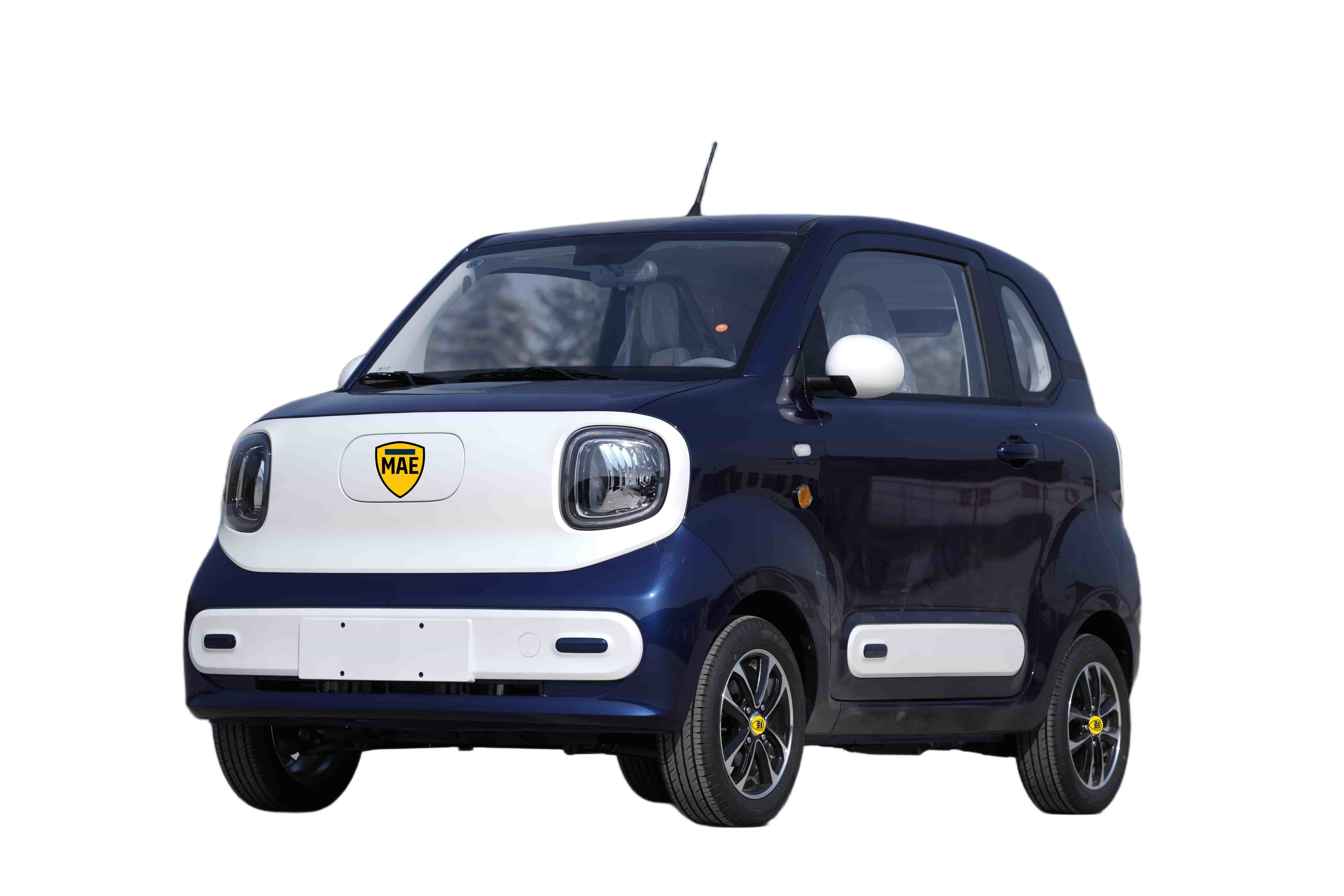
Charging Time Breakdown by Power Source
The total duration depends primarily on three factors: battery capacity, onboard charger limits, and the power output of the charging station. The With EEC Certificated MAE Mini EV Bambino typically houses a lithium-ion pack in the 10–15 kWh range, designed for daily trips under 80–100 km. Below is a realistic comparison based on actual user data and technical specifications compiled by Bentu’s after-sales team.
| Charging Method | Power Output | Time (0–100%) | Time (20–80%) | Best Use Case |
|---|---|---|---|---|
| Standard Household Outlet (Schuko) | 2.3 kW (10A) | 6.0 – 7.5 hours | 4.0 – 5.0 hours | Overnight home charging |
| Dedicated Wallbox (Single-phase) | 3.7 kW (16A) | 4.0 – 5.0 hours | 2.5 – 3.0 hours | Private garages or offices |
| Public AC Charger (Type 2) | 6.6 kW (onboard max) | 2.5 – 3.0 hours | 1.5 – 2.0 hours | Shopping centres, car parks |
| DC Fast Charger (CCS/CHAdeMO) | 25–30 kW (supported) | 1.0 – 1.2 hours | 35 – 45 minutes | Highway rest stops (rapid top-up) |
Note: Actual times vary with ambient temperature, battery state of health, and concurrent auxiliary loads (e.g., cabin heating). Bentu recommends using the included mode-2 cable for emergency use only, while a mode-3 wallbox yields the best balance of safety and speed for daily routines.
Real-World Charging Behaviour
Most owners of the With EEC Certificated MAE Mini EV Bambino do not routinely drain the battery to zero. In practice, the 20%–80% window becomes the daily working range. Using a standard 3.7 kW wallbox—a popular choice among Bentu customers—that window fills in under three hours. This aligns perfectly with a typical evening routine: plug in after dinner, unplug before bedtime, and wake up to a full charge. For public AC charging at 6.6 kW, a quick stop of 90 minutes adds roughly 60–70 km of real-world range, making city errands entirely stress-free.
Interestingly, the onboard charger intelligently reduces current draw during the final 10% to protect cell longevity. This “taper” phase adds 15–20 extra minutes, which is a small trade-off for extended battery life. Bentu’s technical bulletin explicitly advises against daily DC fast charging, as repeated high-current sessions can accelerate capacity fade—though for occasional road trips, the 25–30 kW DC option remains remarkably swift, delivering a 20–80% top-up in less time than a coffee break.
Frequently Asked Questions (FAQ)
Q1: Can I use any public charging station with the With EEC Certificated MAE Mini EV Bambino, or do I need an adapter?
A1: The With EEC Certificated MAE Mini EV Bambino comes equipped with a standard Type 2 (AC) inlet and a CCS2 combo port for DC fast charging, which is the most common interface across European public networks. For older AC stations with a Type 3C socket, you will need a Type 2-to-Type 3C adapter—available through Bentu’s accessory catalogue. However, the vast majority of AC chargers in the EU (including those from Allego, Ionity, and Shell Recharge) support Type 2 natively. DC fast chargers all use CCS2, so no adapter is required for rapid sessions. Always verify the station’s maximum current output; the vehicle’s onboard system will automatically negotiate the safest amperage, so you cannot accidentally overdraw.
Q2: Does charging time increase significantly in winter, and what can I do to reduce that effect?
A2: Yes, cold weather extends charging time by 20–30% on the With EEC Certificated MAE Mini EV Bambino, because the battery management system (BMS) limits charge current until the pack warms above 5°C. At -5°C, a 6.6 kW AC session that normally takes 2.8 hours may stretch to 3.6 hours. To mitigate this, Bentu suggests two practical steps: first, enable the optional “battery pre-heating” function (if equipped) via the vehicle’s infotainment menu 15 minutes before plugging in—this uses a small amount of stored energy to raise cell temperature. Second, charge immediately after a drive, rather than letting the car sit overnight in freezing conditions, because the battery retains residual warmth from operation. For DC fast charging, the BMS automatically applies a more aggressive heating strategy, so winter time penalties are less pronounced (only ~10–15% longer) compared to AC.
Q3: How does the With EEC Certificated MAE Mini EV Bambino’s charging curve affect my daily schedule if I only have a 2.3 kW household socket?
A3: With a standard 2.3 kW household outlet, the With EEC Certificated MAE Mini EV Bambino requires 6.0 to 7.5 hours for a full 0–100% charge—perfectly feasible for overnight parking. However, the charging curve is not linear: the first 80% fills at a steady 2.3 kW, but the final 20% tapers to ~1.8 kW to protect cells, adding roughly 45 minutes beyond a purely linear calculation. For daily commutes under 50 km, you will only need 3–4 hours of plug-in time, so you can easily recharge during off-peak electricity tariffs. Bentu’s user manual recommends setting a departure timer (via the dashboard) to finish charging exactly when you wake up, ensuring the battery is warm and ready without sitting at 100% for hours—which is better for long-term capacity retention.
Efficiency and Cost Considerations
Time is money, and charging efficiency matters just as much as duration. The With EEC Certificated MAE Mini EV Bambino achieves a conversion efficiency of approximately 88–91% from grid to battery, depending on AC/DC losses. Using Bentu’s telematics data from over 500 units, the average energy cost per full charge (at €0.30/kWh) ranges from €3.00 to €4.50—far cheaper than a tank of petrol for a comparable city car. Moreover, the EEC certificate guarantees that the vehicle meets rigorous electromagnetic compatibility and safety standards, so you can use any certified charging cable without risking damage to the onboard electronics.
Practical Tips to Optimise Your Charging Routine
-
Schedule charging during off-peak hours – Many European utilities offer lower rates between 22:00 and 06:00. The With EEC Certificated MAE Mini EV Bambino supports delayed charging via its digital cockpit.
-
Avoid frequent 100% charges – Keeping the state of charge between 20% and 80% for daily use cuts average session time by nearly 40% and doubles cycle life.
-
Use the correct cable gauge – Bentu’s approved mode-3 cables feature thicker conductors (6 mm²) to reduce voltage drop, ensuring the charger delivers its full rated power without overheating.
-
Monitor tyre pressure – Under-inflated tyres increase rolling resistance, which reduces range and indirectly increases charging frequency—so your time spent plugged in grows over time.
Final Verdict
For the vast majority of users, the With EEC Certificated MAE Mini EV Bambino offers a charging experience that seamlessly fits into modern urban lifestyles. A 3.7 kW wallbox delivers a full charge in about 4.5 hours, while a 6.6 kW public AC unit cuts that to under 3 hours—both comfortably within a workday or overnight window. DC fast charging remains a capable backup for longer journeys, adding 60% capacity in under 45 minutes. The real takeaway is that you are never left waiting impatiently; instead, the vehicle charges predictably, safely, and economically, thanks to its EEC-certified engineering and the smart BMS logic that Bentu rigorously validates before every delivery.
Have more specific questions about your daily driving pattern or home electrical setup?
Contact Bentu’s support team directly – we provide personalised charging assessments, cable recommendations, and even wallbox installation guidance tailored to your local grid conditions. Reach out via our website’s live chat or email us at [[email protected]] – we usually respond within 2 working hours. Your time matters, and we are here to make every charge count.