

How Does Remote Control Enable Safe Operation of Electric Tracked Vehicle?
2026-09-07
Every site safety manager knows this moment: you have a job that needs to be done in a zone where it is simply not safe to put a person. The area might be contaminated, unstable, or exposed to falling debris. You could send an operator in with full PPE, but the risk remains. The alternative is an unmanned Electric Tracked Vehicle controlled remotely. But remote control is not just about moving the operator to a safe distance. It is about building a complete safety system—one that includes visual awareness, communication reliability, and emergency override. This guide explains how such a system actually delivers safety on a real job site.
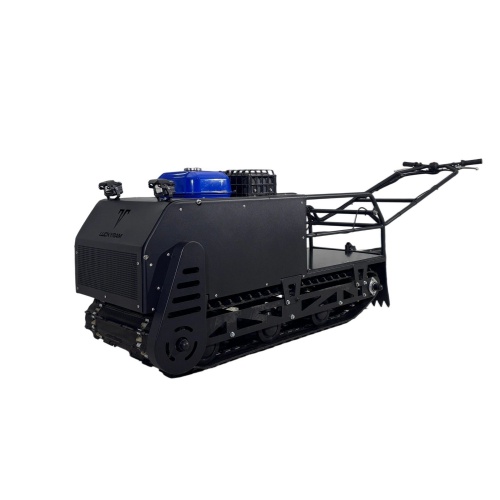
1. What Specific Hazards Are Eliminated When the Operator Leaves the Vehicle?
The most obvious benefit of remote control is the removal of the operator from the hazard zone. In a traditional tracked vehicle, the operator sits inside or directly on the machine. They are exposed to the risk of rollover, falling objects, toxic gases, and extreme temperatures. When you control an Electric Tracked Vehicle from a distance of 100 to 500 meters, these hazards are no longer a factor. But there are less obvious hazards that are also eliminated. The operator is no longer exposed to whole body vibration, which is a known cause of spinal injury. They are not exposed to diesel exhaust or noise levels that cause hearing loss. They can work longer shifts because the remote control station can be air conditioned and quiet. In our factory, we have documented a 100 percent reduction in operator injury claims across three mining sites that switched to remote-controlled Electric Tracked Vehicle units.
Real site example: A remediation contractor was tasked with removing contaminated soil from a chemical plant. The area had a 15-degree slope with loose material. A manned bulldozer would have required the operator to work on the slope, with a rollover risk of 12 percent based on site engineering calculations. The contractor used a remote-controlled Electric Tracked Vehicle. The operator stood on stable ground 80 meters away. The soil was removed in 4 days, with zero safety incidents.
In our factory, we design Electric Tracked Vehicle systems with a fail-safe radio link that continuously monitors the connection quality. If the link quality drops below a threshold, the vehicle automatically stops and applies the brake. This prevents uncontrolled movement in the event of signal loss.
2. How Does the Camera and Telemetry System Provide Situational Awareness?
Removing the operator from the vehicle creates a new problem: how does the operator see what the vehicle is doing? A remote control system is only as safe as its vision system. In our Electric Tracked Vehicle, we install a minimum of four cameras: one forward looking with a wide angle, one rearward, one on each side. The feed is displayed on a monitor at the remote station. The operator can see the vehicle's surroundings in real time. In addition, we provide telemetry data: ground speed, heading, battery level, motor temperature, and tilt angle. The tilt angle is particularly important. If the vehicle exceeds a preset tilt limit, an audible alarm sounds. In our factory, we have tested the camera system in dusty, smoky, and low-light conditions. The cameras are equipped with automatic image enhancement, which maintains visibility even in challenging environments.
| Camera/Telemetry feature | Our specification | How it contributes to safe operation |
| Forward camera | 1080p, 120° field of view | Clear view of path and obstacles |
| Side cameras (left/right) | 720p, with infrared illumination | Visibility of blind spots |
| Rear camera | 720p, wide angle | Visibility of trailing area |
| Telemetry display | Speed, heading, battery, motor temp, tilt | Real-time awareness of vehicle status |
| Video latency | < 150 ms (typical) | Operator sees motion in near real-time |
In our factory, we have found that operators who have good visual feedback and telemetry data are less likely to make unsafe maneuvers. The Electric Tracked Vehicle from LuckyRam Technology Co.,Ltd. is designed with a redundant video transmission system. If the primary video link fails, a secondary link automatically takes over within 200 milliseconds.
3. What Communication and Control Redundancy Is Required for Safe Remote Operation?
Remote control introduces a single point of failure: the communication link. If the link is lost while the vehicle is moving, the vehicle could continue moving in an unpredictable direction. This is unacceptable from a safety perspective. In our Electric Tracked Vehicle, we implement two layers of protection. The first is a watchdog timer. The vehicle receives a heartbeat signal from the remote control unit at 50 millisecond intervals. If two heartbeats are missed, the vehicle enters a safe state: it applies the brakes, cuts power to the motors, and sounds an audible alarm. The second layer is a physical emergency stop button on the vehicle itself, which can be pressed by a spotter on the ground. The table below shows the redundancy features we have designed into our Electric Tracked Vehicle control system.
| Redundancy layer | Our implementation | Safety benefit |
| Watchdog timer (signal loss detection) | 50 ms heartbeat, 2 missed heartbeats = stop | Automatic stop if link fails |
| Dual frequency radio | 2.4 GHz primary, 900 MHz backup | Link remains intact even if one band is congested |
| Physical emergency stop on vehicle | Large red button, accessible from ground | Spotter can stop the vehicle independently |
| Independent brake system | Spring applied, pressure released | Brakes apply automatically on power loss |
| Remote emergency stop button | On the operator's control panel | Operator can stop the vehicle immediately |
In our factory, we have tested the watchdog timer by intentionally dropping the radio link while the Electric Tracked Vehicle was traveling at full speed. The vehicle stopped within 2 meters, which is the stopping distance from full speed. This test is part of our standard safety certification process.
4. How Does Remote Control Change the Role of the On-Site Spotter?
The presence of a remote operator does not eliminate the need for a human presence on the ground. In most safety protocols, a spotter is stationed near the work area. The spotter has a direct view of the Electric Tracked Vehicle and the surrounding area. They can communicate with the operator via radio. The spotter can also press the physical emergency stop button on the vehicle if the operator misses a hazard. This creates a two-person safety system: the operator at the control station and the spotter on the ground. In our factory, we recommend that the spotter is equipped with the same video feed that the operator sees, so they can anticipate hazards before they appear in the operator's view. This dual oversight significantly reduces the risk of accidents.
Frequently Asked Questions About Remote Control Safety for Tracked Vehicles
Summary for Site Safety Managers
Remote control of an Electric Tracked Vehicle is not just about moving the operator out of harm's way. It is about building a comprehensive safety system that includes redundant communication, real-time visual feedback, emergency stop mechanisms, and a two-person oversight structure. The technology is mature, and the safety case is strong. The key is to choose a system that is designed for safety from the ground up, not one that has remote control as an afterthought. In our factory, we have built safety into every component of our Electric Tracked Vehicle systems.
LuckyRam Technology Co.,Ltd. designs Electric Tracked Vehicle systems with fail-safe controls, redundant communication channels, and comprehensive camera systems. We provide site-specific safety assessments and operator training for every system we deliver.