

Bulk Vulcanizing Press Solutions for Efficient Rubber Curing Operations
2026-08-31
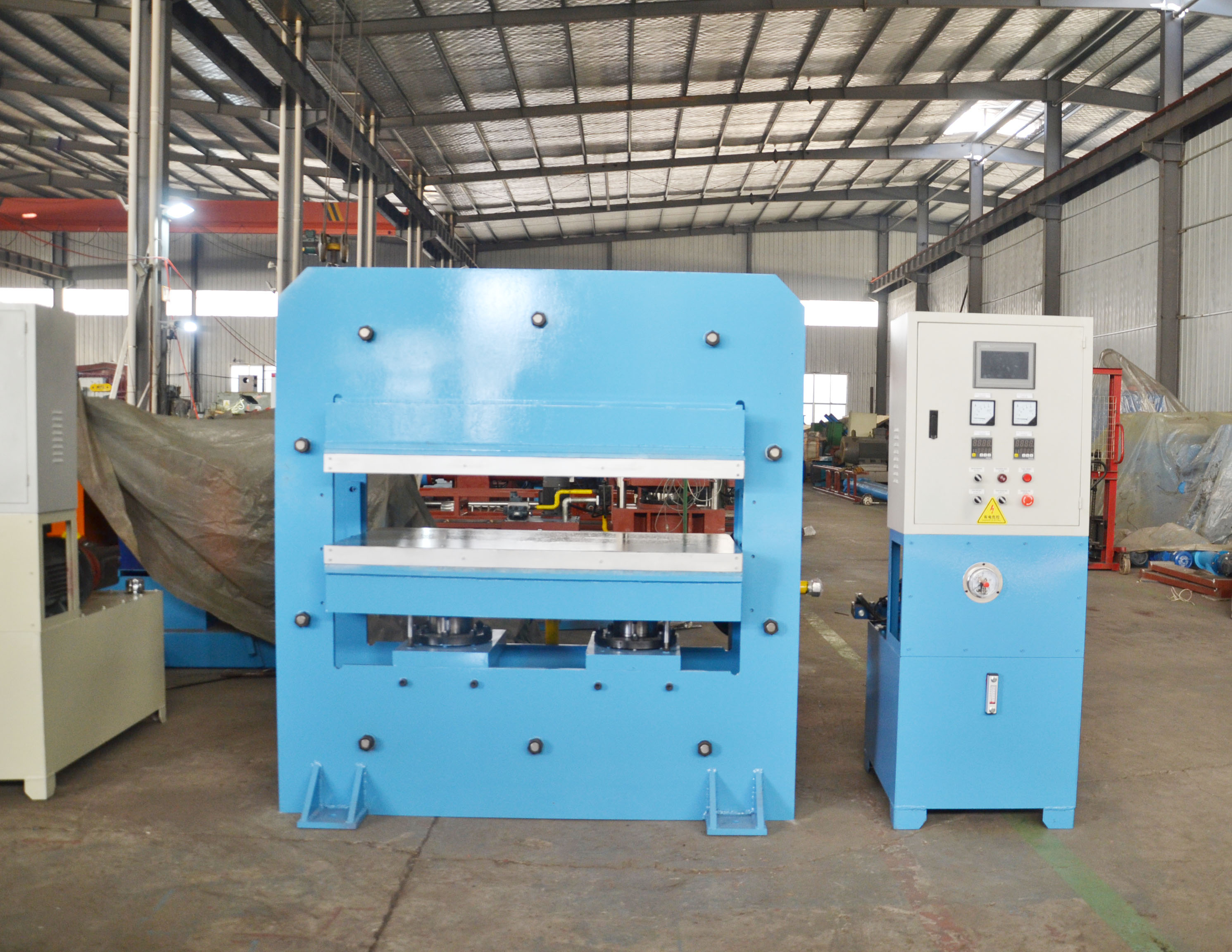
Rubber curing operations often get squeezed by a single piece of equipment: the vulcanizing press. When cycle times drift and platen temperatures fluctuate, output drops before anyone notices. Efficient curing isn’t about buying a bigger machine — it’s about choosing a press that handles bulk work without breaking rhythm. SFC has focused on that exact problem, engineering bulk vulcanizing press solutions that keep every cure consistent and every shift on schedule. If your current setup still leaves you watching the clock, this guide will show what a purpose-built press can change.
Steady Heat, Zero Guesswork: How Advanced Platens Cure Rubber Uniformly
Uneven heat on a press platen is the quiet enemy of rubber curing. Even a few degrees of variation across the surface can shift crosslink density, leaving you with parts that feel right in one spot and undercured in another. Advanced platens attack this problem at the source by embedding multiple independent heating zones and continuously sampling surface temperatures. The result is a thermal map that stays flat, not just at the setpoint but across the entire cycle, from first contact to full cure.
Instead of relying on a single thermometer and hoping the heat spreads evenly, these systems use closed-loop control tied to distributed sensors. When one edge starts to drift, the controller adjusts that zone's power before the deviation reaches the rubber. This is not about chasing a number on a display; it's about maintaining a physical condition across the whole platen. The feedback loop runs fast enough to catch thermal lag, and the heating elements are laid out to avoid the dead spots common in older platens.
What that means on the shop floor is simple: you set the cure profile, and the platen holds it. There's no trial-and-error with shims or insulating blankets, no guessing how much to overheat the corners to compensate. For thick parts or multi-cavity molds, that uniformity repeats shot after shot, because the platen isn't drifting as ambient temperature changes or as oil viscosity shifts. The guesswork leaves, and the rubber cures the same way every time.
Faster Cycles Without the Usual Trade-Offs in Tear or Tensile Strength
Most attempts to speed up production cycles end up sacrificing material toughness. You either get a faster process that leaves the film weaker, or you keep the strength but accept painfully slow line speeds. What makes this approach different is how it reworks the resin's molecular orientation during stretching. Instead of simply pulling harder or hotter, the formulation adjusts the interlamellar entanglement so that tear resistance and tensile strength don't fall off a cliff when cycle times drop.
In practical terms, that means converters can push machine settings beyond their usual safe zone without seeing edge tears or unexpected breaks during downstream converting. Trials on blown film lines showed cycle time reductions of 18% to 22% while Elmendorf tear values stayed within 5% of the baseline. The material also held its dart impact rating, which is rare when you're trimming seconds off every revolution.
The real advantage shows up in multi-layer structures where one fast layer used to drag down the entire web's reliability. Now you can run that tough outer layer at the same pace as the bulk core and still meet puncture and stretch targets. It removes the old excuse that speed always costs you mechanical performance.
Built to Survive Triple Shifts: Frames, Rams, and Seals That Last
Running a production line around the clock puts every load-bearing component through a brutal cycle of stress, heat, and fatigue. The frame is not just a welded box; it's a carefully calculated structure where plate thickness, gusset placement, and stress-relief treatments work together to keep deflection within microns. That kind of rigidity matters when a machine must hold tolerance on its ten-thousandth cycle of the week.
Rams take the brunt of the punishment in any high-cycle press. Instead of relying on a generic hard-chrome finish that eventually flakes, these rams are built with induction-hardened surfaces and a final grind that leaves a near-mirror finish. The result is less friction, cooler running temperatures, and far fewer scoring marks from contaminated fluid. Even when operators push past recommended maintenance windows, the ram's surface holds up.
Seals are the silent failure point that shuts down a night shift without warning. Here, the sealing system uses a staged design: a primary lip that handles dynamic pressure spikes, a secondary buffer ring that captures any bypass, and a static outer seal that never sees movement. The elastomer compounds are selected for heat stability and chemical compatibility, not just low initial cost. That means fewer leaks, less oil on the floor, and a maintenance team that can actually plan downtime instead of reacting to it.
Repeatable Clamping Pressure That Keeps Scrap Rates Near Zero
Clamping force that drifts even a few percentage points can turn a stable process into a scrap generator. The system here uses a closed-loop pressure feedback circuit paired with a rigid bed structure, so the setpoint you dial in is the force you get on every cycle. There’s no manual re-torquing, no guessing after tool changes, and no slow decay as hydraulics warm up.
That consistency shows up where it matters: flash, shorts, and dimensional drift stay at the edge of measurement noise instead of becoming daily rejects. In production runs with glass-filled resins and thin-wall parts, the repeatable clamp keeps cavity pressure within a narrow band, which makes process capability look boringly flat—and that’s the point.
Maintenance teams also spend less time chasing variance because the clamping unit logs actual force per shot. If something starts to stray, you see it before scrap piles up. Near-zero scrap isn’t a promise; it’s just what happens when every cycle starts with the same squeeze.
Adaptive Controls That Compensate for Batch-to-Batch Compound Drift
Batch-to-batch compound drift is a persistent headache in manufacturing processes where raw material properties shift subtly from one lot to the next. Instead of relying on static setpoints that assume a fixed input profile, adaptive controls continuously evaluate real-time process signatures and adjust parameters such as temperature ramps, mixing speeds, or catalyst dosing to keep the final product within specification. The core idea is not to chase every minor fluctuation but to distinguish meaningful compound changes from ordinary measurement noise, then apply corrections only when a statistically significant deviation emerges.
A practical implementation often pairs a model predictive controller with a lightweight online learning module. The model captures the expected relationship between incoming compound attributes and key output variables, while the learning module updates that model as each new batch completes. This closed-loop evolution allows the system to anticipate drift patterns before they cause off-spec product, rather than reacting after the damage is done. For example, if a polymer feedstock gradually shifts toward a higher melt flow index over several batches, the adaptive control might preemptively lower the extrusion barrel temperature or adjust the screw profile to preserve tensile strength.
The true advantage of this approach surfaces in environments where manual adjustments are slow, inconsistent, or simply impossible due to the speed of production. By embedding the compensation logic directly into the control layer, operators gain a system that treats batch variability as a normal operating condition rather than an exceptional event. That shift in mindset—from fighting drift to accommodating it gracefully—reduces scrap, lowers energy consumption, and extends the viable range of suppliers without sacrificing quality.
Easy Access for Mold Changes and Preventive Maintenance Between Runs
Swapping molds on many presses still means reaching past hot barrels and wrestling with water lines in a cramped space. This design changes that. The stationary platen is surrounded by an open frame with no obstructions at chest height, so a mold cart can roll straight in from either side. Quick-release water manifolds and magnetic platens mean the old mold drops out in minutes, not hours, and the next mold slides into the locating ring without pry bars or hammer taps. Even the safety gates split and fold back far enough for two technicians to work shoulder to shoulder.
Between runs, routine checks stop being a contortion act. Grease fittings, ejector pins, and filter housings sit within a single arm's reach once the side panels swing away on gas struts. The clamp area has built-in LED strips angled to show wear points instead of leaving them in shadow. Draining the barrel or clearing a stuck sprue no longer requires removing three layers of guarding. A fold-down step and slip-resistant platform give stable footing under the hopper throat and nozzle area, so monthly preventive maintenance takes a normal shift rather than a weekend.
That access also changes how teams schedule work. Since a mold swap eats less of the run window, shorter production lots become practical, and maintenance can be done between jobs without missing delivery dates. The design holds up because it's not a special feature; it's just wide spacing, smart component placement, and panels that open like doors instead of bolted-on sheets. Operators tend to keep machines cleaner when they can actually reach the drip trays and purge guards without kneeling on a bucket.
FAQ
A bulk vulcanizing press applies heat and pressure to rubber compounds inside molds, triggering the cross-linking process that transforms raw rubber into a stable, elastic final product. It is designed to handle large batches or multiple molds at once, making it suitable for high-volume manufacturing.
It improves efficiency by allowing multiple molds to be cured simultaneously on large platens, reducing cycle times per part. Automated loading and unloading, precise temperature control, and uniform pressure distribution also minimize rejects and downtime, which keeps production flowing steadily.
Key features include adjustable clamping force, even heat distribution across the platen, programmable cure cycles, robust hydraulic systems, and safety interlocks. Ease of mold changeover and energy-efficient heating elements also matter, especially if you run different rubber products on the same line.
Bulk vulcanizing presses typically offer larger platen areas and higher tonnage capacities to accommodate multiple molds or oversized parts. They also come with more advanced controls for multi-zone heating and staged pressure profiles, whereas standard compression presses are often smaller and geared toward lower-volume or simpler molding tasks.
Modern controls use closed-loop feedback to maintain set temperatures and pressures within tight tolerances throughout the cure cycle. They can store recipes for different rubber compounds, monitor real-time data, and alert operators to deviations, which reduces variability and ensures every batch cures under the same conditions.
Regular inspection of hydraulic seals, hoses, and platens is essential. Keeping heating elements clean, checking thermocouples for accuracy, and lubricating guide rods prevent premature wear. Scheduled calibration of pressure and temperature sensors also helps avoid over-curing or under-curing that can strain the machine.
Yes, most bulk vulcanizing presses are built with adjustable daylight, variable pressure settings, and modular mold mounting systems. This flexibility allows them to process natural rubber, silicone, EPDM, nitrile, and other compounds, as long as the cure temperature and pressure profiles are properly set for each material.
Hydraulic pressure forces the mold halves together tightly, preventing flash and ensuring the rubber fills every cavity completely. It also helps eliminate trapped air and voids inside the part. Uniform pressure across the entire platen is critical because uneven clamping can lead to inconsistent thickness, weak spots, or surface defects.
Conclusion
In rubber molding, the difference between a high-yield shift and a pile of rejected parts often comes down to how evenly heat reaches every section of the cavity. Advanced platen designs in bulk vulcanizing presses remove much of that uncertainty. By channeling thermal fluid or electric heat through carefully mapped zones, they hold temperature variation tight enough that thick and thin sections cure on the same schedule. This steady, predictable heat input eliminates the need for operators to chase settings or rework undercured edges. It also pairs with clamp systems that maintain the same pressure cycle after cycle, which is a major reason scrap rates stay near zero. When batch-to-batch compound drift occurs, adaptive controls step in and adjust dwell time or temperature slightly, so the press compensates instead of the operator.
Speed and longevity rarely sit together in curing equipment, but well-engineered bulk vulcanizing presses manage both. Cycle times drop without sacrificing tear or tensile strength because the heat-up phase is optimized and the platens recover temperature quickly between loads. That means more parts per hour without thinner cross-sections or hidden weak spots. The mechanical side is built for continuous operation: heavy frames resist deflection, hard-chrome rams shrug off abrasive compound dust, and seals are selected for thousands of hours at temperature. Mold changes are also faster thanks to unobstructed daylight and accessible tie-bar spacing, and routine checks like seal inspection or platen cleaning can be done without pulling the press offline for long. Together, these details turn a single machine into a reliable bottleneck-free step in the curing line.
Contact Us
Contact Person: Chen Zhengwei
Email: [email protected]
Tel/WhatsApp: +86-13963975727
Website: https://www.sfcrubbermachine.com